Smart Software and Optimum Consulting Announce Strategic Partnership
Belmont, Mass., May 2023 – Smart Software, Inventory optimization, demand planning, and forecasting software leader, and Optimum Consulting, today announced their partnership to address the supply chain planning needs of the Manufacturing, Wholesale, and Retail industries in Australia and New Zealand. Optimum Consulting will sell and deploy Smart’s next-generation cloud platform, Smart Inventory Planning & Optimization (Smart IP&O™), as an integral part of its Sales, Operations, and Inventory Planning (SIOP) practice.

Smart Software is a Microsoft Co-sell-ready partner and, over the years, has created a flawless connector to integrate tools with Microsoft Dynamics. The integration brings the cloud-based Smart IP&O (Inventory Planning and Optimization) into the latest version of Microsoft Dynamic solution. By seamlessly integrating strategic planning in Smart IP&O with operational execution in Dynamics, business users can continuously predict, respond, and plan more effectively in today’s uncertain business environment. Smart’s unique approach to planning intermittent demand is especially impactful for public utilities and transit agencies, given the prevalence of spare parts with highly sporadic, seemingly unforecastable usage.

Optimum Consulting is a Microsoft Dynamics 365 Solutions Partner who is totally committed to the Manufacturing, Wholesale, and Retail industries in Australia and New Zealand. The Team’s experts help clients build agile operating models, drive business process improvements, and turn customers into advocates by delivering end-to-end Microsoft Dynamics 365, Microsoft Power Apps, Business Intelligence & Analytics, and Managed Services Solutions.

“Smart Software helps our customers by delivering insightful business analytics for inventory modeling and forecasting that drive ordering and replenishment in the latest version of Microsoft Dynamics. With Smart IP&O, our customers gain a means to shape inventory strategy to align with the business objectives while empowering their planning teams to reduce inventory and improve service,” says  Matthew Lingard, CEO at  Optimum Consulting

“Maximizing the benefits our solutions can provide requires the expertise and perspective to consider requirements, set goals, and to develop the supporting business process that ensures adoption and benefits. These are the qualities that The New Partner brings to the table and we look forward to our joint success,”…. says Greg Hartunian, President, and CEO at Smart Software


About Smart Software, Inc.

Founded in 1981, Smart Software, Inc. is a leader in providing businesses with enterprise-wide demand forecasting, planning and inventory optimization solutions.  Smart Software’s demand forecasting and inventory optimization solutions have helped thousands of users worldwide, including customers at mid-market enterprises and Fortune 500 companies, such as Disney, Arizona Public Service, and Ameren.  Smart Inventory Planning & Optimization gives demand planners the tools to handle sales seasonality, promotions, new and aging products, multi-dimensional hierarchies, and intermittently demanded service parts and capital goods items.  It also provides inventory managers with accurate estimates of the optimal inventory and safety stock required to meet future orders and achieve desired service levels.  Smart Software is headquartered in Belmont, Massachusetts and can be found on the World Wide Web at www.smartcorp.com.


About the Partner, Inc.

Optimum Consulting is a Microsoft Dynamics 365 Solutions Partner who is totally committed to the Manufacturing, Wholesale, and Retail industries in Australia and New Zealand. The Team’s experts help clients build agile operating models, drive business process improvements, and turn customers into advocates by delivering end-to-end Microsoft Dynamics 365, Microsoft Power Apps, Business Intelligence & Analytics, and Managed Services Solutions. The Team’s functional expertise covers eCommerce, Retail, Pricing & Promotions, Customer Data Platform, Customer Journey Mapping, Customer Experience, Forecasting & Master Planning, Advanced Warehouse, and Production Planning.  Optimum Consulting’s technical capabilities span across Commerce Design and Development, Commerce Server, Point of Sale (POS) Development, Finance and Supply Chain Management (SCM) Development, Artificial Intelligence (AI) and Machine Learning (ML), Data Warehouse and Data Lake, and related Microsoft Cloud solutions.


For more information, please contact Smart Software, Inc., Four Hill Road, Belmont, MA 02478.
Phone: 1-800-SMART-99 (800-762-7899); FAX: 1-617-489-2748; E-mail: info@smartcorp.com


Uncover data facts and improve inventory performance

The best inventory planning processes rely on statistical analysis to uncover relevant facts about the data. For instance:

  1. The range of demand values and supplier lead times to expect.
  2. The most likely values of item demand and supplier lead time.
  3. The full probability distributions of item demand and supplier lead time.

If you reach the third level, you have the facts required to answer important operational questions, additional questions such as:

  1. Exactly how much extra stock is needed to improve service levels by 5%?
  2. What will happen to on-time-delivery if inventory is reduced by 5%?
  3. Will either of the above changes generate a positive financial return?
  4. More generally, what service level target and associated inventory level is most profitable?

When you have the facts and add your business knowledge, you can make more informed stocking decisions that will generate significant returns. You’ll also set proper expectations with internal and external stakeholders, ensuring there are fewer unwelcome surprises.

Service Level Driven Planning for Service Parts Businesses in the Dynamics 365 space

Service-Level-Driven Service Parts Planning for Microsoft Dynamics BC or F&SC is a four-step process that extends beyond simplified forecasting and rule-of-thumb safety stocks. It provides service parts planners with data-driven, risk-adjusted decision support.


The math to determine this level of planning simply does not exist in D365 functionality.  It requires math and AI that passes thousands of times through calculations for each part and part center (locations).  Math and AI like this are unique to Smart.  To understand more, please read on. 


Step 1. Ensure that all stakeholders agree on the metrics that matter. 

All participants in the service parts inventory planning process must agree on the definitions and what metrics matter most to the organization. Service Levels detail the percentage of time you can completely satisfy required usage without stocking out. Fill Rates detail the percentage of the requested usage that is immediately filled from stock. (To learn more about the differences between service levels and fill rate, watch this 4-minute lesson here.) Availability details the percentage of active spare parts with an on-hand inventory of at least one unit. Holding costs are the annualized costs of holding stock accounting for obsolescence, taxes, interest, warehousing, and other expenses. Shortage costs are the cost of running out of stock, including vehicle/equipment downtime, expedites, lost sales, and more. Ordering costs are the costs associated with placing and receiving replenishment orders.


Step 2. Benchmark historical and predicted current service level performance.

All participants in the service parts inventory planning process must hold a common understanding of predicted future service levels, fill rates, and costs and their implications for your service parts operations. It is critical to measure both historical Key Performance Indicators (KPIs) and their predictive equivalents, Key Performance Predictions (KPPs).  Leveraging modern software, you can benchmark past performance and leverage probabilistic forecasting methods to simulate future performance.  Virtually every Demand Planning solution stops here.  Smart goes further by stress-testing your current inventory stocking policies against all plausible future demand scenarios.  It is these thousands of calculations that build our KPPs.  The accuracy of this improves D365’s ability to balance the costs of holding too much with the costs of not having enough. You will know ahead of time how current and proposed stocking policies are likely to perform.


Step 3. Agree on targeted service levels for each spare part and take proactive corrective action when targets are predicted to miss. 

Parts planners, supply chain leadership, and the mechanical/maintenance teams should agree on the desired service level targets with a full understanding of the tradeoffs between stockout risk and inventory cost.  A call out here is that our D365 customers are almost always stunned by the stocking levels difference between 100% and 99.5% availability.   With the logic for nearly 10,000 scenarios that half a percent outage is almost never hit.   You achieve full stocking policy with much lower costs.   You find the parts that are understocked and correct those.  The balancing point is often a 7-12% reduction in inventory costs. 

This leveraging of what-if scenarios in our parts planning software gives management and buyers the ability to easily compare alternative stocking policies and identify those that best meet business objectives.  For some parts, a small stock out is okay.  For others, we need that 99.5% parts availability.  Once these limits are agreed upon, we use the Power of D365 to optimize inventory using D365 core ERP as it should be.   The planning is automatically uploaded to engage Dynamics with modified reorder points, safety stock levels, and/or Min/Max parameters.  This supports a single Enterprise center point, and people are not using multiple systems for their daily parts management and purchasing.


Step 4. Make it so and keep it so. 

Empower the planning team with the knowledge and tools it needs to ensure that you strike agreed-upon balance between service levels and costs.  This is critical and important.  Using Dynamics F&SC or BC to execute your ERP transactions is also important.  These two Dynamics ERPs have the highest level of new ERP growth on the planet.  Using them as they are intended to be used makes sense.   Filling the white space for the math and AI calculations for Maintenance and Parts management also makes sense.  This requires a more complex and targeted solution to help.  Smart Software Inventory Optimization for EAM and Dynamics ERPs holds the answer.    

Remember: Recalibration of your service parts inventory policy is preventive maintenance against both stockouts and excess stock.  It helps costs, frees capital for other uses, and supports best practices for your team. 


Extend Microsoft 365 F&SC and AX with Smart IP&O

To see a recording of the Microsoft Dynamics Communities Webinar showcasing Smart IP&O, register here:

https://smartcorp.com/inventory-planning-with-microsoft-365-fsc-and-ax/


Probabilistic Forecasting for Intermittent Demand

The Smart Forecaster

  Pursuing best practices in demand planning,

forecasting and inventory optimization

Intermittent, lumpy or uneven demand —particularly for low-demand items like service and spare parts — is especially difficult to predict with any accuracy. Smart Software’s proprietary probabilistic forecasting dramatically improves service level accuracy.  If any of these scenarios apply to your company then probabilistic forecasting will help improve your bottom line.

  • Do you have intermittent or lumpy demand with large, infrequent spikes that are many times the average demand?
  • Is it hard to obtain business information about when demand is likely to spike again?
  • Do you miss out on business opportunities because you can’t accurately forecast demand and estimate inventory requirements for certain unpredictable products?
  • Are you required to hold inventory on many items even if they are infrequently demanded in order to differentiate vs. the competition by providing high service levels?
  • Do you have to make unnecessarily large investments in inventory to cover unexpected orders and materials requirements?
  • Do you have to deliver to customers right away despite long supplier lead times?

If you’ve answered yes to some or all of the questions above, you aren’t alone. Intermittent demand —also known as irregular, sporadic, lumpy, or slow-moving demand — affects industries of all types and sizes: capital goods and equipment sectors, automotive, aviation, public transit, industrial tools, specialty chemicals, utilities and high tech, to name just a few. And it makes demand forecasting and planning extremely difficult. It can be much more than a headache; it can be a multi-million-dollar problem, especially for MRO businesses and others who manage and distribute spare and service parts.

Identifying intermittent demand data isn’t hard. It typically contains a large percentage of zero values, with non-zero values mixed in randomly. But few forecasting solutions have yielded satisfactory results even in this era of Big Data Analysis, Predictive Analytics, Machine Learning, and Artificial Intelligence.


DOWNLOAD THE ARTICLE

Traditional Approaches and their Reliance on an Assumed Demand Distribution

Traditional statistical forecasting methods, like exponential smoothing and moving averages, work well when product demand data is normal, or smooth, but it doesn’t give accurate results with intermittent data. Many automated forecasting tools fail because they work by identifying patterns in demand history data, such as trend and seasonality. But with intermittent demand data, patterns are especially difficult to recognize. These methods also tend to ignore the special role of zero values in analyzing and forecasting demand.Even so, some conventional statistical forecasting methods can produce credible forecasts of the average demand per period.  However, when demand is intermittent, a forecast of the average demand is not nearly sufficient for inventory planning.  Accurate estimates of the entire distribution (i.e., complete set) of all possible lead-time demand values is needed. Without this, these methods produce misleading inputs to inventory control models — with costly consequences.

Collague with gears ans statistical forecast modeling


To produce reorder points, order-up-to levels, and safety stocks for inventory planning, many forecasting approaches rely on assumptions about the demand and lead time distribution.  Some assume that the probability distribution of total demand for a particular product item over a lead time (lead-time demand) will resemble a normal, classic bell-shaped curve. Other approaches might rely on a Poisson distribution or some other textbook distribution.  With intermittent demand, a one-sized fits all approach is problematic because the actual distribution will often not match the assumed distribution.  When this occurs, estimates of the buffer stock will be wrong.  This is especially the case when managing spare parts (Table 1).

For each intermittently demanded item, the importance of having an accurate forecast of the entire distribution of all possible lead time demand values — not just one number representing the average or most likely demand per period — cannot be overstated. These forecasts are key inputs to the inventory control models that recommend correct procedures for the timing and size of replenishment orders (reorder points and order quantities). They are particularly essential in spare parts environments, where they are needed to accurately estimate customer service level inventory requirements (e.g., a 95 or 99 percent likelihood of not stocking out of an item) for satisfying total demand over a lead time.  Inventory planning departments must be confident that when they target a desired service level that they will achieve that target.  If the forecasting model consistently yields a different service level than targeted, inventory will be mismanaged and confidence in the system will erode.

Faced with this challenge, many organizations rely on applying rule of thumb based approaches to determine stocking levels or will apply judgmental adjustments to their statistical forecasts, which they hope will more accurately predict future activity based on past business experience. But there are several problems with these approaches, as well.

Rule of thumb approaches ignore variability in demand and lead time. They also do not update for changes in demand patterns and don’t provide critical trade-off information about the relationship between service levels and inventory costs.

Judgmental forecasting is not feasible when dealing with large numbers (thousands and tens of thousands) of items. Furthermore, most judgmental forecasts provide a single-number estimate instead of a forecast of the full distribution of lead-time demand values. Finally, it is easy to inadvertently but incorrectly predict a downward (or upward) trend in demand, based on expectations, resulting in understocking (or over-stocking) inventory.


How does Probabilistic Demand Forecasting Work in Practice?

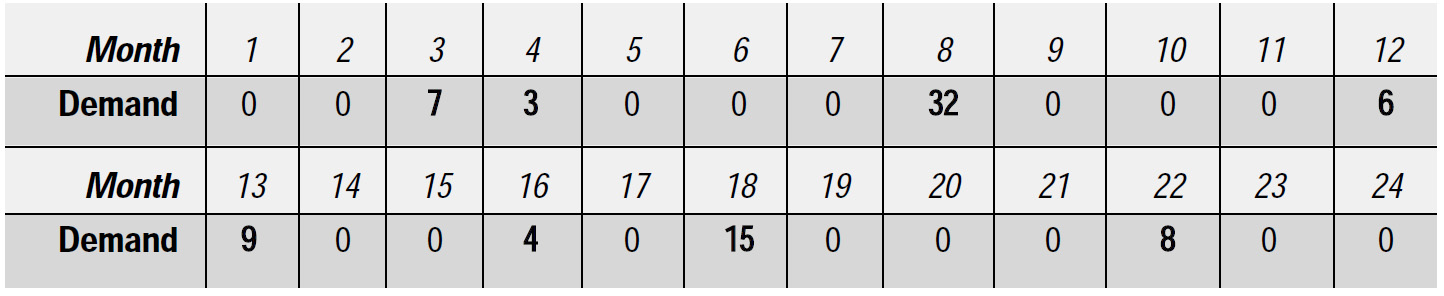
Although the full architecture of this technology includes additional proprietary features, a simple example of the approach demonstrates the usefulness of the technique. See Table 1.
intermittently demanded product items spreedsheet

Table 1. Monthly demand values for a service part item.

The 24 monthly demand values for a service part itemare typical of intermittent demand. Let’s say you need forecasts of total demand for this item over the next three months because your parts supplier needs three months to fill an order to replenish inventory. The probabilistic approach is to sample from the 24 monthly values, with replacement, three times, creating a scenario of total demand over the three-month lead time.
How does the new method of forecasting intermittent demand work

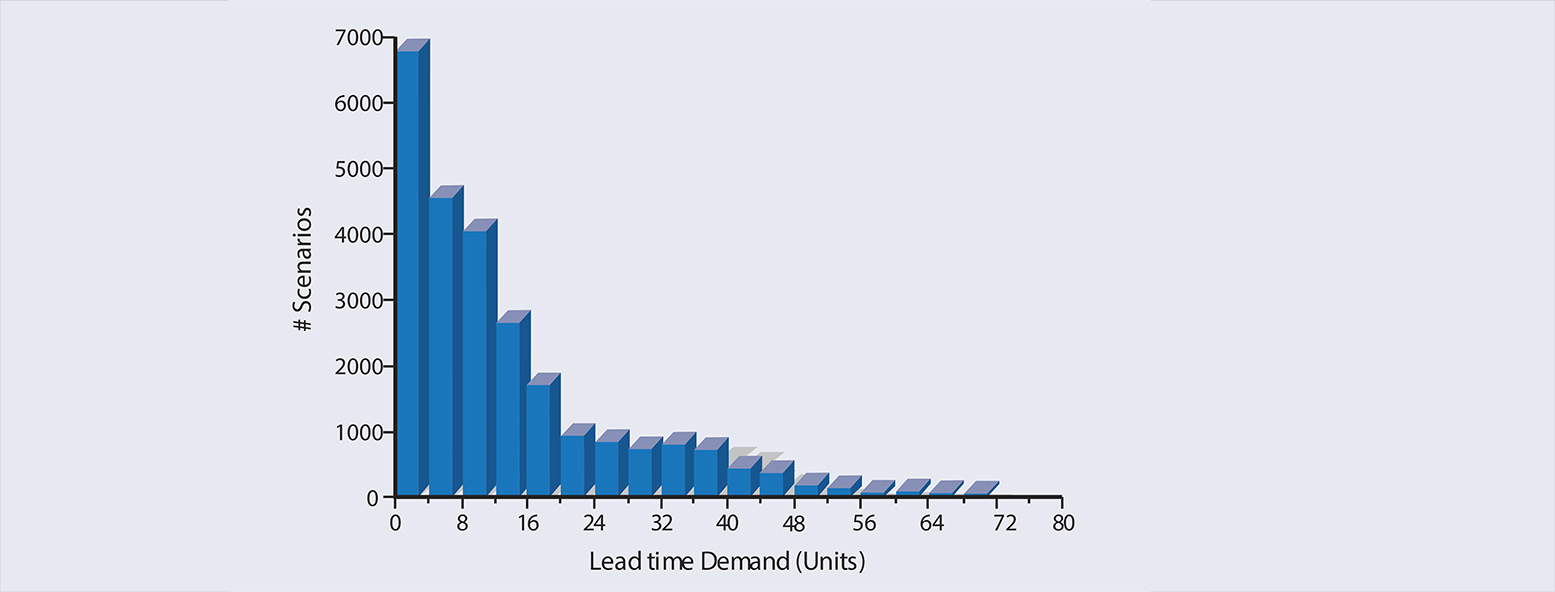
Figure 1. The results of 25,000 scenarios.


You might randomly select months 6, 12 and 4, which gives you demand values of 0, 6 and 3, respectively, for a total lead-time demand (in units) of 0 + 6 + 3 = 9. You then repeat this process, perhaps randomly selecting months 19, 8 and 14, which gives a lead-time demand of 0 + 32 + 0 = 32 units. Continuing this process, you can build a statistically rigorous picture of the entire distribution of possible lead-time demand values for this item. Figure 1 shows the results of 25,000 such scenarios, indicating (in this example) that the most likely value for lead-time demand is zero but that lead-time demand could be as great as 70 or more units. It also reflects the real-life possibility that nonzero demand values for the part item occurring in the future could differ from those that have occurred in the past.

With the high-speed computational resources available in the cloud today, probabilistic forecasting methods can provide fast and realistic forecasts of total lead-time demand for thousands or tens of thousands of intermittently demanded product items. These forecasts can then be entered directly into inventory control models to insure that enough inventory is available to satisfy customer demand. This also ensures that no more inventory than necessary is maintained, minimizing costs.


A Field Proven Method That Works

Customers that have implemented the technology have found that it increases customer service level accuracy and significantly reduces inventory costs.

Warehouse or storage getting inventory optimization

A nationwide hardware retailer’s warehousing operation forecasted inventory requirements for 12,000 intermittently demanded SKUs at 95 and 99 percent service levels. The forecast results were almost 100 percent accurate. At the 95 percent service level, 95.23 percent of the items did not stock out (95 percent would have been perfect). At the 99 percent service level, 98.66 percent of the items did not stock out (99 percent would have been perfect).

The aircraft maintenance operation of a global company got similar service level forecasting results with 6,000 SKUs. Potential annual savings in inventory carrying costs were estimated at $3 million. The aftermarket business unit of an automotive industry supplier, two-thirds of whose 7,000 SKUs demonstrate highly intermittent demand, also projected $3 million in annual cost savings.

That the challenge of forecasting intermittent product demand has indeed been met is good news for manufacturers, distributors, and spare parts/MRO businesses.  With cloud computing, Smart Software’s field-proven probabilistic method is now accessible to the non-statistician and can be applied at scale to tens of thousands of parts.  Demand data that was once un-forecastable no longer poses an obstacle to achieving the highest customer service levels with the lowest possible investment in inventory.


 

Hand placing pieces to build an arrow

DOWNLOAD THE ARTICLE

Leave a Comment

Related Posts

The Importance of Clear Service Level Definitions in Inventory Management

The Importance of Clear Service Level Definitions in Inventory Management

Inventory optimization software that supports what-if analysis will expose the tradeoff of stockouts vs. excess costs of varying service level targets. But first it is important to identify how “service levels” is interpreted, measured, and reported. This will avoid miscommunication and the false sense of security that can develop when less stringent definitions are used. Clearly defining how service level is calculated puts all stakeholders on the same page. This facilitates better decision-making.

The Cost of Spreadsheet Planning

The Cost of Spreadsheet Planning

Companies that depend on spreadsheets for demand planning, forecasting, and inventory management are often constrained by the spreadsheet’s inherent limitations. This post examines the drawbacks of traditional inventory management approaches caused by spreadsheets and their associated costs, contrasting these with the significant benefits gained from embracing state-of-the-art planning technologies.

Leveraging Epicor Kinetic Planning BOMs with Smart IP&O to Forecast Accurately

Leveraging Epicor Kinetic Planning BOMs with Smart IP&O to Forecast Accurately

In this blog, we explore how leveraging Epicor Kinetic Planning BOMs with Smart IP&O can transform your approach to forecasting in a highly configurable manufacturing environment. Discover how Smart, a cutting-edge AI-driven demand planning and inventory optimization solution, can simplify the complexities of predicting finished goods demand, especially when dealing with interchangeable components. Learn how Planning BOMs and advanced forecasting techniques enable businesses to anticipate customer needs more accurately, ensuring operational efficiency and staying ahead in a competitive market.

Recent Posts

  • Managing Spare Parts Inventory: Best PracticesManaging Spare Parts Inventory: Best Practices
    In this blog, we’ll explore several effective strategies for managing spare parts inventory, emphasizing the importance of optimizing stock levels, maintaining service levels, and using smart tools to aid in decision-making. Managing spare parts inventory is a critical component for businesses that depend on equipment uptime and service reliability. Unlike regular inventory items, spare parts often have unpredictable demand patterns, making them more challenging to manage effectively. An efficient spare parts inventory management system helps prevent stockouts that can lead to operational downtime and costly delays while also avoiding overstocking that unnecessarily ties up capital and increases holding costs. […]
  • 5 Ways to Improve Supply Chain Decision Speed5 Ways to Improve Supply Chain Decision Speed
    The promise of a digital supply chain has transformed how businesses operate. At its core, it can make rapid, data-driven decisions while ensuring quality and efficiency throughout operations. However, it's not just about having access to more data. Organizations need the right tools and platforms to turn that data into actionable insights. This is where decision-making becomes critical, especially in a landscape where new digital supply chain solutions and AI-driven platforms can support you in streamlining many processes within the decision matrix. […]
  • Two employees checking inventory in temporary storage in a distribution warehouse.12 Causes of Overstocking and Practical Solutions
    Managing inventory effectively is critical for maintaining a healthy balance sheet and ensuring that resources are optimally allocated. Here is an in-depth exploration of the main causes of overstocking, their implications, and possible solutions. […]
  • FAQ Mastering Smart IP&O for Better Inventory ManagementFAQ: Mastering Smart IP&O for Better Inventory Management.
    Effective supply chain and inventory management are essential for achieving operational efficiency and customer satisfaction. This blog provides clear and concise answers to some basic and other common questions from our Smart IP&O customers, offering practical insights to overcome typical challenges and enhance your inventory management practices. Focusing on these key areas, we help you transform complex inventory issues into strategic, manageable actions that reduce costs and improve overall performance with Smart IP&O. […]
  • 7 Key Demand Planning Trends Shaping the Future7 Key Demand Planning Trends Shaping the Future
    Demand planning goes beyond simply forecasting product needs; it's about ensuring your business meets customer demands with precision, efficiency, and cost-effectiveness. Latest demand planning technology addresses key challenges like forecast accuracy, inventory management, and market responsiveness. In this blog, we will introduce critical demand planning trends, including data-driven insights, probabilistic forecasting, consensus planning, predictive analytics, scenario modeling, real-time visibility, and multilevel forecasting. These trends will help you stay ahead of the curve, optimize your supply chain, reduce costs, and enhance customer satisfaction, positioning your business for long-term success. […]

    Inventory Optimization for Manufacturers, Distributors, and MRO

    • Managing Spare Parts Inventory: Best PracticesManaging Spare Parts Inventory: Best Practices
      In this blog, we’ll explore several effective strategies for managing spare parts inventory, emphasizing the importance of optimizing stock levels, maintaining service levels, and using smart tools to aid in decision-making. Managing spare parts inventory is a critical component for businesses that depend on equipment uptime and service reliability. Unlike regular inventory items, spare parts often have unpredictable demand patterns, making them more challenging to manage effectively. An efficient spare parts inventory management system helps prevent stockouts that can lead to operational downtime and costly delays while also avoiding overstocking that unnecessarily ties up capital and increases holding costs. […]
    • Innovating the OEM Aftermarket with AI-Driven Inventory Optimization XLInnovating the OEM Aftermarket with AI-Driven Inventory Optimization
      The aftermarket sector provides OEMs with a decisive advantage by offering a steady revenue stream and fostering customer loyalty through the reliable and timely delivery of service parts. However, managing inventory and forecasting demand in the aftermarket is fraught with challenges, including unpredictable demand patterns, vast product ranges, and the necessity for quick turnarounds. Traditional methods often fall short due to the complexity and variability of demand in the aftermarket. The latest technologies can analyze large datasets to predict future demand more accurately and optimize inventory levels, leading to better service and lower costs. […]
    • Future-Proofing Utilities. Advanced Analytics for Supply Chain OptimizationFuture-Proofing Utilities: Advanced Analytics for Supply Chain Optimization
      Utilities in the electrical, natural gas, urban water, and telecommunications fields are all asset-intensive and reliant on physical infrastructure that must be properly maintained, updated, and upgraded over time. Maximizing asset uptime and the reliability of physical infrastructure demands effective inventory management, spare parts forecasting, and supplier management. A utility that executes these processes effectively will outperform its peers, provide better returns for its investors and higher service levels for its customers, while reducing its environmental impact. […]
    • Centering Act Spare Parts Timing Pricing and ReliabilityCentering Act: Spare Parts Timing, Pricing, and Reliability
      In this article, we'll walk you through the process of crafting a spare parts inventory plan that prioritizes availability metrics such as service levels and fill rates while ensuring cost efficiency. We'll focus on an approach to inventory planning called Service Level-Driven Inventory Optimization. Next, we'll discuss how to determine what parts you should include in your inventory and those that might not be necessary. Lastly, we'll explore ways to enhance your service-level-driven inventory plan consistently. […]

      Smart Software to Present at Community Summit North America
      Smart Software’s Channel Sales Director and Enterprise Solution Engineer, to present three sessions at this year’s Community Summit event in Orlando, FL.   Belmont, MA, – Smart Software, Inc., provider of industry-leading demand forecasting, planning, and inventory optimization solutions, today announced that its Channel Sales Director, Pete Reynolds, and its Enterprise Solution Engineer Erik Subatis, have been selected to present three sessions at the Dynamics Community Summit NA. They will explain how to plan using Collaborative forecasting, how to Maximize Service Levels, and how to Forecast Accurately during the three sessions. Smart Software will also be exhibiting at the conference showcasing Smart Inventory Planning & Optimization and bi-directional integrations to Microsoft Dynamics NAV, Microsoft Dynamics 365 Business Central, and Microsoft Dynamics AX. Smart Software Presentations at Community Summit North America 2022
      • Maximize Service Levels and Minimize Inventory Costs
        • Session Date: 10/12/2022   2:00 PM -2:45 PM
        • Room Number: Tampa 2 – Convention Center, Level 2
      • Predict and Plan the Sales Cycle Using Collaborative Forecasting
        •  Session Date: 10/13/2022   9:00 AM -9:45 AM
        • Room Number: Sarasota 1 – Convention Center, Level 2
      • 5 Demand Planning Tips for Calculating Forecast Uncertainty
        • Session Date: 10/13/2022   10:00 AM -11:00 AM
        • Room Number: Osceola B – Convention Center, Level 2
        Community Summit North America is the largest independent gathering of the Microsoft business applications ecosystem of users, partners, and ISVs on the planet. Come by booth #1122 to learn about probabilistic forecasting and optimization methods that can make a big difference to your bottom line. Whether you are a seasoned Microsoft user looking for new ways to optimize your supply chain or are new to Dynamics Applications and want to understand how a planning platform can help drive revenue increases and inventory reductions, please stop by.   About Smart Software, Inc. Founded in 1981, Smart Software, Inc. is a leader in providing businesses with enterprise-wide demand forecasting, planning, and inventory optimization solutions.  Smart Software’s demand forecasting and inventory optimization solutions have helped thousands of users worldwide, including customers at mid-market enterprises and Fortune 500 companies, such as Disney, Arizona Public Service, and Ameren. Smart Inventory Planning & Optimization gives demand planners the tools to handle sales seasonality, promotions, new and aging products, multi-dimensional hierarchies, and intermittently demanded service parts and capital goods items.  It also provides inventory managers with accurate estimates of the optimal inventory and safety stock required to meet future orders and achieve desired service levels.  Smart Software is headquartered in Belmont, Massachusetts, and can be found on the World Wide Web at www.smartcorp.com. Community Summit 2021 Smart Software Inventory planning
      For more information, please contact Smart Software, Inc., Four Hill Road, Belmont, MA 02478. Phone: 1-800-SMART-99 (800-762-7899); FAX: 1-617-489-2748; E-mail: info@smartcorp.com