
Redefine Exceptions and Fine Tune Planning to Address Uncertainty

The Smart Forecaster

 Pursuing best practices in demand planning,

forecasting and inventory optimization

Inventory Planning from the Perspective of a Physicist

In a perfect world, Just in Time (JIT) would be the appropriate solution for inventory management. If you can exactly predict what you need and where you need it and your suppliers can get what you need without delay, then you do not need to maintain much inventory locally.  But as the saying goes from famous pugilist Mike Tyson, “everyone has a plan until they get punched in the mouth.” And the latest punch in the mouth for the global supply chain was last week’s Suez Canal Blockage that held up $9.6B in trade costing an estimated $6.7M per minute[1].  Disruptions from these and similar events should be modeled and accounted for in your planning.

The assumption that you can exactly predict the future was apparent in Isaac Newton’s laws. Since the 1920’s with the introduction of quantum physics, uncertainty became fundamental to our understanding of nature. Uncertainty is built into fundamental reality.  So too should it be built into Supply and Demand Planning processes.  Yet too often, black swan events such as the Suez Canal blockage are often thought of as anomalies and as a result, discounted when planning. It is not enough to look back in hindsight and proclaim that it should have been expected. Something needs to be done about addressing the occurrence of other such events in the future and planning stocking levels accordingly.

We must move beyond the “thin tailed distribution” thinking where extreme outcomes are discounted and plan for “fat tails.”  So how do we execute a real-world JIT plan when it comes to planning inventory? To do this, the first step is to estimate the realistic lead time to obtain an item. However, estimation is difficult due to lead time uncertainty.  Using actual supplier lead times in your company database and external data, you can develop a distribution of possible future lead times and demands within those lead times. Probabilistic forecasting will allow you to account for disruptions and unusual events by not limiting your estimates to what has been observed solely on your own short-term demand and lead time data.  You’ll be able to generate possible outcomes with associated probabilities for each occurrence.

Once you have an estimate of the lead time and demand distribution, you can then specify the service level you need to have for that part. Using solutions such as Smart Inventory Optimization (SIO), you will be able confidently stock based on the targeted stock-out risk with minimal inventory carrying cost. You may also consider letting the solution prescribe optimal service level targets by assessing the costs of additional inventory vs. cost of stockout.

Finally, as I have already noted, we need to accept that we can never eliminate all uncertainty. As a physicist, I have always been intrigued by the fact that, even at the most basic levels of reality as we understand it today, there is still uncertainty. Albert Einstein believed in certainty (determinism) in physical law.  If he were an inventory manager, he might have argued for JIT because he believed physical laws should allow perfect predictability. He famously said, “God does not play with dice.”  Or could it be possible that the universe we exist in was a “black swan” event in a prior “multi-verse” that produced a particular kind of universe that allowed us to exist.

In inventory planning, as in science, we cannot escape the reality of uncertainty and the impact of unusual events.  We must plan accordingly.


[1] https://www.bbc.com/news/business-56559073#:~:text=Looking%20at%20the%20bigger%20picture,0.2%20to%200.4%20percentage%20points.

Leave a Comment

Related Posts

No Results Found

The page you requested could not be found. Try refining your search, or use the navigation above to locate the post.

Recent Posts

  • Managing Spare Parts Inventory: Best PracticesManaging Spare Parts Inventory: Best Practices
    In this blog, we’ll explore several effective strategies for managing spare parts inventory, emphasizing the importance of optimizing stock levels, maintaining service levels, and using smart tools to aid in decision-making. Managing spare parts inventory is a critical component for businesses that depend on equipment uptime and service reliability. Unlike regular inventory items, spare parts often have unpredictable demand patterns, making them more challenging to manage effectively. An efficient spare parts inventory management system helps prevent stockouts that can lead to operational downtime and costly delays while also avoiding overstocking that unnecessarily ties up capital and increases holding costs. […]

  • 5 Ways to Improve Supply Chain Decision Speed5 Ways to Improve Supply Chain Decision Speed
    The promise of a digital supply chain has transformed how businesses operate. At its core, it can make rapid, data-driven decisions while ensuring quality and efficiency throughout operations. However, it's not just about having access to more data. Organizations need the right tools and platforms to turn that data into actionable insights. This is where decision-making becomes critical, especially in a landscape where new digital supply chain solutions and AI-driven platforms can support you in streamlining many processes within the decision matrix. […]

  • Two employees checking inventory in temporary storage in a distribution warehouse.12 Causes of Overstocking and Practical Solutions
    Managing inventory effectively is critical for maintaining a healthy balance sheet and ensuring that resources are optimally allocated. Here is an in-depth exploration of the main causes of overstocking, their implications, and possible solutions. […]

  • FAQ Mastering Smart IP&O for Better Inventory ManagementFAQ: Mastering Smart IP&O for Better Inventory Management.
    Effective supply chain and inventory management are essential for achieving operational efficiency and customer satisfaction. This blog provides clear and concise answers to some basic and other common questions from our Smart IP&O customers, offering practical insights to overcome typical challenges and enhance your inventory management practices. Focusing on these key areas, we help you transform complex inventory issues into strategic, manageable actions that reduce costs and improve overall performance with Smart IP&O. […]

  • 7 Key Demand Planning Trends Shaping the Future7 Key Demand Planning Trends Shaping the Future
    Demand planning goes beyond simply forecasting product needs; it's about ensuring your business meets customer demands with precision, efficiency, and cost-effectiveness. Latest demand planning technology addresses key challenges like forecast accuracy, inventory management, and market responsiveness. In this blog, we will introduce critical demand planning trends, including data-driven insights, probabilistic forecasting, consensus planning, predictive analytics, scenario modeling, real-time visibility, and multilevel forecasting. These trends will help you stay ahead of the curve, optimize your supply chain, reduce costs, and enhance customer satisfaction, positioning your business for long-term success. […]

    Inventory Optimization for Manufacturers, Distributors, and MRO

    • Managing Spare Parts Inventory: Best PracticesManaging Spare Parts Inventory: Best Practices
      In this blog, we’ll explore several effective strategies for managing spare parts inventory, emphasizing the importance of optimizing stock levels, maintaining service levels, and using smart tools to aid in decision-making. Managing spare parts inventory is a critical component for businesses that depend on equipment uptime and service reliability. Unlike regular inventory items, spare parts often have unpredictable demand patterns, making them more challenging to manage effectively. An efficient spare parts inventory management system helps prevent stockouts that can lead to operational downtime and costly delays while also avoiding overstocking that unnecessarily ties up capital and increases holding costs. […]

    • Innovating the OEM Aftermarket with AI-Driven Inventory Optimization XLInnovating the OEM Aftermarket with AI-Driven Inventory Optimization
      The aftermarket sector provides OEMs with a decisive advantage by offering a steady revenue stream and fostering customer loyalty through the reliable and timely delivery of service parts. However, managing inventory and forecasting demand in the aftermarket is fraught with challenges, including unpredictable demand patterns, vast product ranges, and the necessity for quick turnarounds. Traditional methods often fall short due to the complexity and variability of demand in the aftermarket. The latest technologies can analyze large datasets to predict future demand more accurately and optimize inventory levels, leading to better service and lower costs. […]

    • Future-Proofing Utilities. Advanced Analytics for Supply Chain OptimizationFuture-Proofing Utilities: Advanced Analytics for Supply Chain Optimization
      Utilities in the electrical, natural gas, urban water, and telecommunications fields are all asset-intensive and reliant on physical infrastructure that must be properly maintained, updated, and upgraded over time. Maximizing asset uptime and the reliability of physical infrastructure demands effective inventory management, spare parts forecasting, and supplier management. A utility that executes these processes effectively will outperform its peers, provide better returns for its investors and higher service levels for its customers, while reducing its environmental impact. […]
    • Centering Act Spare Parts Timing Pricing and ReliabilityCentering Act: Spare Parts Timing, Pricing, and Reliability
      In this article, we'll walk you through the process of crafting a spare parts inventory plan that prioritizes availability metrics such as service levels and fill rates while ensuring cost efficiency. We'll focus on an approach to inventory planning called Service Level-Driven Inventory Optimization. Next, we'll discuss how to determine what parts you should include in your inventory and those that might not be necessary. Lastly, we'll explore ways to enhance your service-level-driven inventory plan consistently. […]
      Coping with Surging Demand During the Rebound

      The Smart Forecaster

       Pursuing best practices in demand planning,

      forecasting and inventory optimization

      Many of our customers that saw demand dry up during the pandemic are now seeing demand return.  Some are seeing a significant demand surge. Other customers in critical industries like plastics, biotech, semiconductors and electronics saw demand surges starting as far back as last April. For suggestions about how to cope with these situations, please read on.

      Surging demand usually creates two problems: inability to fill orders and inability to get replenishment due to supplier overload. This situation requires changes in the way you use your advanced planning software. Here are three tips to help you cope.


      Tip #1: Narrow your temporal focus


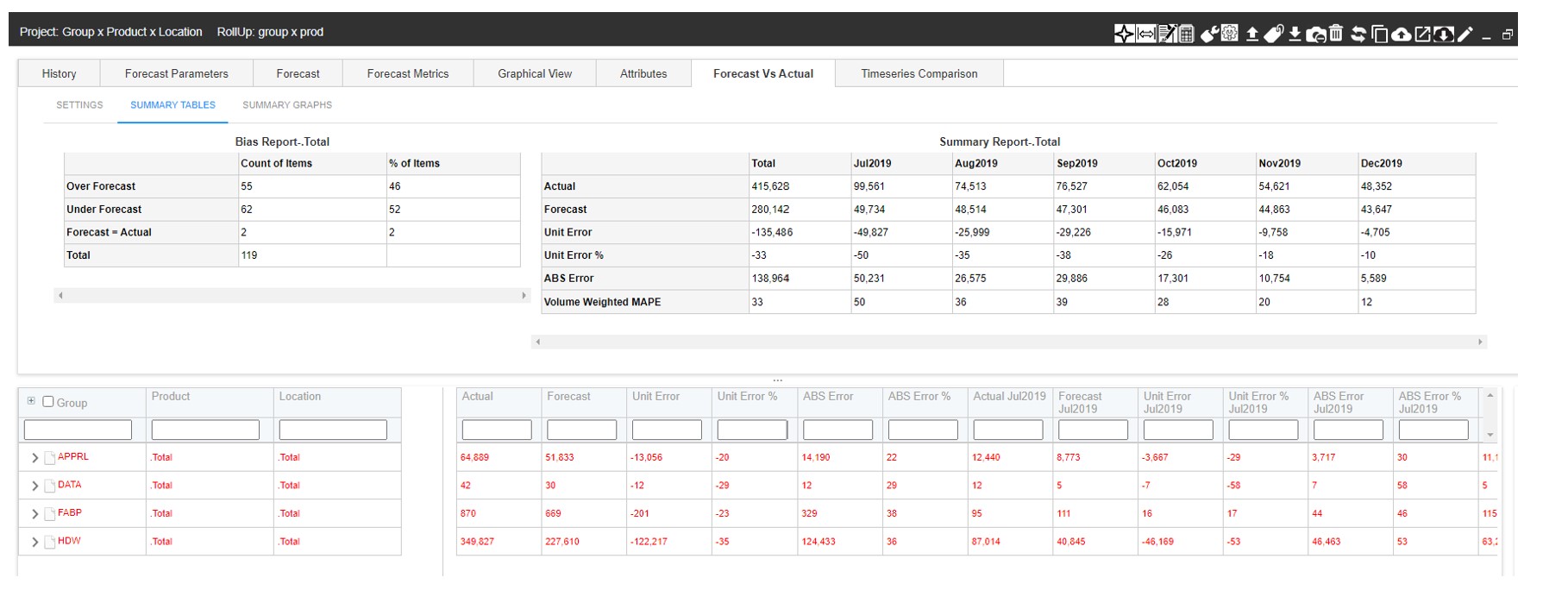
      In normal times (remember those?), more data implied better results. Nowadays, old data poison your calculations, since they represent conditions that no longer apply. You should base forecasts and other calculations on data from the current situation. Where to cut off past data may be obvious from a plot of the data, or you may decide to set a “reasonable” cutoff date based on a consensus of colleagues.  Smart Software has developed machine learning algorithms that automatically identify how much historical data should be optimally fed to the forecast model. Be on the lookout for these enhancements to the software that will be rolling out soon. In the meantime, conduct accuracy tests using held-out actuals using different historical start dates.  Smart’s forecast vs. actual feature will support this automatically.

      Smart Demand Planner forecasts vs. actual report


      Tip #2: Increase your planning tempo


      When operations are stable, you can set your inventory policies and trust them to be appropriate for a long time. When times are turbulent, it is important to increase the frequency of your planning cycles to keep old policy settings from drifting too far away from optimality.  More frequent recalibration of your stocking policies and forecasts means that you’ll be quicker to catch trends that will surprise your competition and always keep you steps ahead.  With software capable of automatically selecting optimal values, all that work can be done in one shot by the software. You should review those changes and possibly tweak them, but it makes sense to let the software do the bulk of the work.


      Tip #3: Do more What-If planning


      In turbulent times, you might expect even more turbulence in the future. Using your software for what-if planning helps you prepare for changes that may be coming. For example, suppose you’ve been in touch with a key supplier who hints that they may be raising prices or may have to slip their delivery schedules. By feeding the software different inputs, you can do contingency planning. If prices go up, you can see how responding by changing order quantities would impact your inventory operating costs and inventory investment. If lead times go up, you can see what the impact would be on item availability. This foreknowledge helps you figure out what your counter-moves would be before the crisis hits.

      If there ever was a time when we could cruise on automatic pilot, it’s in the rear-view mirror. Your organization, coping with explosive growth, has many challenges. Old answers are obsolete; new answers have to come from somewhere, fast. Advanced software that leverages probabilistic forecasting can help, along with changes in planning processes.


      Leave a Comment

      Related Posts

      No Results Found

      The page you requested could not be found. Try refining your search, or use the navigation above to locate the post.

      Recent Posts

      • Managing Spare Parts Inventory: Best PracticesManaging Spare Parts Inventory: Best Practices
        In this blog, we’ll explore several effective strategies for managing spare parts inventory, emphasizing the importance of optimizing stock levels, maintaining service levels, and using smart tools to aid in decision-making. Managing spare parts inventory is a critical component for businesses that depend on equipment uptime and service reliability. Unlike regular inventory items, spare parts often have unpredictable demand patterns, making them more challenging to manage effectively. An efficient spare parts inventory management system helps prevent stockouts that can lead to operational downtime and costly delays while also avoiding overstocking that unnecessarily ties up capital and increases holding costs. […]
      • 5 Ways to Improve Supply Chain Decision Speed5 Ways to Improve Supply Chain Decision Speed
        The promise of a digital supply chain has transformed how businesses operate. At its core, it can make rapid, data-driven decisions while ensuring quality and efficiency throughout operations. However, it's not just about having access to more data. Organizations need the right tools and platforms to turn that data into actionable insights. This is where decision-making becomes critical, especially in a landscape where new digital supply chain solutions and AI-driven platforms can support you in streamlining many processes within the decision matrix. […]
      • Two employees checking inventory in temporary storage in a distribution warehouse.12 Causes of Overstocking and Practical Solutions
        Managing inventory effectively is critical for maintaining a healthy balance sheet and ensuring that resources are optimally allocated. Here is an in-depth exploration of the main causes of overstocking, their implications, and possible solutions. […]
      • FAQ Mastering Smart IP&O for Better Inventory ManagementFAQ: Mastering Smart IP&O for Better Inventory Management.
        Effective supply chain and inventory management are essential for achieving operational efficiency and customer satisfaction. This blog provides clear and concise answers to some basic and other common questions from our Smart IP&O customers, offering practical insights to overcome typical challenges and enhance your inventory management practices. Focusing on these key areas, we help you transform complex inventory issues into strategic, manageable actions that reduce costs and improve overall performance with Smart IP&O. […]
      • 7 Key Demand Planning Trends Shaping the Future7 Key Demand Planning Trends Shaping the Future
        Demand planning goes beyond simply forecasting product needs; it's about ensuring your business meets customer demands with precision, efficiency, and cost-effectiveness. Latest demand planning technology addresses key challenges like forecast accuracy, inventory management, and market responsiveness. In this blog, we will introduce critical demand planning trends, including data-driven insights, probabilistic forecasting, consensus planning, predictive analytics, scenario modeling, real-time visibility, and multilevel forecasting. These trends will help you stay ahead of the curve, optimize your supply chain, reduce costs, and enhance customer satisfaction, positioning your business for long-term success. […]

        Inventory Optimization for Manufacturers, Distributors, and MRO

        • Managing Spare Parts Inventory: Best PracticesManaging Spare Parts Inventory: Best Practices
          In this blog, we’ll explore several effective strategies for managing spare parts inventory, emphasizing the importance of optimizing stock levels, maintaining service levels, and using smart tools to aid in decision-making. Managing spare parts inventory is a critical component for businesses that depend on equipment uptime and service reliability. Unlike regular inventory items, spare parts often have unpredictable demand patterns, making them more challenging to manage effectively. An efficient spare parts inventory management system helps prevent stockouts that can lead to operational downtime and costly delays while also avoiding overstocking that unnecessarily ties up capital and increases holding costs. […]
        • Innovating the OEM Aftermarket with AI-Driven Inventory Optimization XLInnovating the OEM Aftermarket with AI-Driven Inventory Optimization
          The aftermarket sector provides OEMs with a decisive advantage by offering a steady revenue stream and fostering customer loyalty through the reliable and timely delivery of service parts. However, managing inventory and forecasting demand in the aftermarket is fraught with challenges, including unpredictable demand patterns, vast product ranges, and the necessity for quick turnarounds. Traditional methods often fall short due to the complexity and variability of demand in the aftermarket. The latest technologies can analyze large datasets to predict future demand more accurately and optimize inventory levels, leading to better service and lower costs. […]
        • Future-Proofing Utilities. Advanced Analytics for Supply Chain OptimizationFuture-Proofing Utilities: Advanced Analytics for Supply Chain Optimization
          Utilities in the electrical, natural gas, urban water, and telecommunications fields are all asset-intensive and reliant on physical infrastructure that must be properly maintained, updated, and upgraded over time. Maximizing asset uptime and the reliability of physical infrastructure demands effective inventory management, spare parts forecasting, and supplier management. A utility that executes these processes effectively will outperform its peers, provide better returns for its investors and higher service levels for its customers, while reducing its environmental impact. […]
        • Centering Act Spare Parts Timing Pricing and ReliabilityCentering Act: Spare Parts Timing, Pricing, and Reliability
          In this article, we'll walk you through the process of crafting a spare parts inventory plan that prioritizes availability metrics such as service levels and fill rates while ensuring cost efficiency. We'll focus on an approach to inventory planning called Service Level-Driven Inventory Optimization. Next, we'll discuss how to determine what parts you should include in your inventory and those that might not be necessary. Lastly, we'll explore ways to enhance your service-level-driven inventory plan consistently. […]

          Smart Software VP of Research to Present at Business Analytics Conference, INFORMS 2021

          Dr. Tom Willemain to lead INFORMS session on Generation of Probabilistic Time-Series Scenarios

          Belmont, Mass., March 2021 – Smart Software, Inc., provider of industry-leading demand forecasting, planning, and inventory optimization solutions, today announced that Tom Willemain, Vice President for Research, will present at the 2021 Virtual INFORMS Business Analytics Conference from April 12 – 14.

          Dr. Willemain will present a session on Probabilistic Time-Series Scenarios, and how such scenarios are used, evaluated, and automatically generated using the statistical bootstrap. Frequently, OR models supporting business decisions are feed on massive numbers of probabilistic scenarios depicting future operating conditions. For example, with business operating at ever-lower levels of aggregation and ever-higher frequencies, demand planning and inventory optimization now use models fueled by scenarios representing the randomness of product demand at a daily scale. Dr. Willemain will discuss how even trivial decision tasks such as operator education benefit from large numbers of realistic training scenarios.

          As the leading Business Analytics Conference, INFORMS provides the opportunity to interact with the world’s leading forecasting researchers and practitioners. The attendance is large enough so that the best in the field are attracted, yet small enough that you can meet and discuss one-on-one. The conference features content from leading analytics professionals, who share and showcase top analytics applications that save lives, save money, and solve problems.

          Furthermore, to cutting-edge analytics content, the virtual analytics conference recognizes and prioritizes the need for quality “face-to-face” interactions, networking, and collaboration in a virtual setting.


          About Dr. Thomas Willemain

          Dr. Thomas Reed Willemain served as an Expert Statistical Consultant to the National Security Agency (NSA) at Ft. Meade, MD, and as a member of the Adjunct Research Staff at an affiliated think-tank, the Institute for Defense Analyses Center for Computing Sciences (IDA/CCS). He is Professor Emeritus of Industrial and Systems Engineering at Rensselaer Polytechnic Institute, having previously held faculty positions at Harvard’s Kennedy School of Government and Massachusetts Institute of Technology. He is also co-founder and Senior Vice President/Research at Smart Software, Inc. He is a member of the Association of Former Intelligence Officers, the Military Operations Research Society, the American Statistical Association, and several other professional organizations. Willemain received the BSE degree (summa cum laude, Phi Beta Kappa) from Princeton University and the MS and Ph.D. degrees from Massachusetts Institute of Technology. His other books include: Statistical Methods for Planners, Emergency Medical Systems Analysis (with R. C. Larson), and 80 articles in peer-reviewed journals on statistics, operations research, health care, and other topics. For more information, email: TomW@SmartCorp.com or visit www.TomWillemain.com.


          About Smart Software, Inc.

          Founded in 1981, Smart Software, Inc. is a leader in providing businesses with enterprise-wide demand forecasting, planning, and inventory optimization solutions.  Smart Software’s demand forecasting and inventory optimization solutions have helped thousands of users worldwide, including customers at mid-market enterprises and Fortune 500 companies, such as Disney, Siemens, Metro Transit, APS, and The American Red Cross.  Smart Inventory Planning & Optimization gives demand planners the tools to handle sales seasonality, promotions, new and aging products, multi-dimensional hierarchies, and intermittently demanded service parts and capital goods items.  It also provides inventory managers with accurate estimates of the optimal inventory and safety stock required to meet future orders and achieve desired service levels.  Smart Software is headquartered in Belmont, Massachusetts, and can be found on the World Wide Web at www.smartcorp.com.


          SmartForecasts and Smart IP&O have registered trademarks of Smart Software, Inc.  All other trademarks are their respective owners’ property.

          For more information, please contact Smart Software, Inc., Four Hill Road, Belmont, MA 02478.
          Phone: 1-800-SMART-99 (800-762-7899); FAX: 1-617-489-2748; E-mail: info@smartcorp.com


          Smart Software Joins as Sponsor of the International Symposium on Forecasting (ISF)

          The International Institute of Forecasters and Smart Software announced a new association as part of Smart Software’s sponsorship of the International Symposium on Forecasting (ISF)

          Belmont, Mass., March 2021 – Smart Software, Inc., provider of industry-leading demand forecasting, planning, and inventory optimization solutions, announced a new association with the International Institute of Forecasters. This sponsorship will enable Smart Software to approach leading experts in the forecasting field, including many Nobel laureates.

          The International Symposium on Forecasting, presented by the International Institute of Forecasters (IIF), is the premier international event for professional forecasters.  Since 1981, this event has been recognized for the important forecasting research presented there, and for having hosted highly respected experts in the field of forecasting.  Smart Software will support the IIF’s initiatives to bring together industry know-how and experience with evidence-based research innovations.

          The IIF has held this symposium every year for the past four decades in New York, Dublin, Prague, Hong Kong, Sydney, and virtually in 2021. The International Symposium on Forecasting (ISF) is the premier forecasting conference, attracting the world’s leading forecasting researchers, practitioners, and students. Through keynote speaker presentations, academic sessions, workshops, and social programs, the ISF provides many excellent networking and learning opportunities.


          About Smart Software, Inc.

          Founded in 1981, Smart Software, Inc. is a leader in providing businesses with enterprise-wide demand forecasting, planning, and inventory optimization solutions.  Smart Software’s demand forecasting and inventory optimization solutions have helped thousands of users worldwide, including customers at mid-market enterprises and Fortune 500 companies, such as Disney, Siemens, Metro Transit, APS, and The American Red Cross.  Smart Inventory Planning & Optimization gives demand planners the tools to handle sales seasonality, promotions, new and aging products, multi-dimensional hierarchies, and intermittently demanded service parts and capital goods items.  It also provides inventory managers with accurate estimates of the optimal inventory and safety stock required to meet future orders and achieve desired service levels.  Smart Software is headquartered in Belmont, Massachusetts, and can be found on the World Wide Web at www.smartcorp.com.


          SmartForecasts and Smart IP&O have registered trademarks of Smart Software, Inc.  All other trademarks are their respective owners’ property.

          For more information, please contact Smart Software, Inc., Four Hill Road, Belmont, MA 02478.
          Phone: 1-800-SMART-99 (800-762-7899); FAX: 1-617-489-2748; E-mail: info@smartcorp.com


          Inventory Planning Processes: Challenges and Opportunities

          Smart Software is pleased to introduce our new series of educational webinars, offered exclusively for Epicor Users. In this webinar, Greg Hartunian, CEO at Smart Software, will lead a 45-minute webinar focusing on specific approaches to demand forecasting and inventory planning that will enable you to increase revenue capture, improve service levels, and reduce inventory holding costs.  Minimizing excess stock, equipment downtime, and lost sales requires the right planning foundation. Most inventory planning teams rely upon traditional forecasting approaches, rule of thumb methods, and sales feedback. Many companies struggle to keep up, putting businesses at risk when the insulation of a growing top line thins. Our Webinar at EUG discusses these approaches, why they often fail, and how new probabilistic forecasting and optimization methods can make a big difference to your bottom line.


          Please join our webinar at Epicor Users Group, featuring Greg Hartunian, CEO of Smart Software, who will identify the main problems of inventory planning processes and show in a live Demo how to solve them.


          On demand webinar


          Smart Inventory Planning and Optimization is an integrated set of native web applications that provides a single, easy to use, scalable, environment with field-proven inventory and forecast modeling that optimizes inventory stocking policy and improves forecast accuracy. Please register to attend the webinar. If you are interested but not can not attend, please register anyway – we will record our session and will send you a link to the replay.

          We hope you will be able to join us!


          SmartForecasts and Smart IP&O are registered trademarks of Smart Software, Inc.  All other trademarks are the property of their respective owners.


          For more information, please contact Smart Software,Inc., Four Hill Road, Belmont, MA 02478.
          Phone: 1-800-SMART-99 (800-762-7899); E-mail: info@smartcorp.com