Spare Parts Planning Webinar for Public Transit Agencies

Spare Parts Planning in the Age of Covid: Problems and Solutions for Public Transit Agencies

Covid has wreaked havoc on public transit. Plummeting ridership, reduced capacity, unprecedented losses in fare and tax revenue, along with added costs to keep buses and trains safe have resulted in massive transit system budget shortfalls. APTA reports that even with two rounds of emergency funding, public transit agencies will face a projected shortfall of $39.3 Billion through 2023.

This webinar will address the need for transit agencies to reconsider traditional practices, find innovative ways to capture cost savings, and do so without jeopardizing service levels. Greg Hartunian, CEO of Smart Software, will discuss the particular challenge of spare parts planning, why traditional practices used today fail, and how inventory forecasting technology is being harnessed to optimize performance and drive significant financial return.

Greg will highlight the experience of Smart Software’s transit customers, how they’ve generated bottom-line savings, what they are doing to prepare for the rebound, and share a technology demonstration using transit industry data. Please feel free to review the content below. We have provided case studies profiling the use of our technology within public transit and a software review from APICS Magazine.

Transit Specific Content


About Smart Software, Inc.

Founded in 1981, Smart Software, Inc. is a leader in providing businesses with enterprise-wide demand forecasting, planning, and inventory optimization solutions.  Smart Software’s demand forecasting and inventory optimization solutions have helped thousands of users worldwide, including customers at mid-market enterprises and Fortune 500 companies, such as Disney, Siemens, Metro Transit, APS, and The American Red Cross.  Smart Inventory Planning & Optimization gives demand planners the tools to handle sales seasonality, promotions, new and aging products, multi-dimensional hierarchies, and intermittently demanded service parts and capital goods items.  It also provides inventory managers with accurate estimates of the optimal inventory and safety stock required to meet future orders and achieve desired service levels.  Smart Software is headquartered in Belmont, Massachusetts, and can be found on the World Wide Web at www.smartcorp.com.


SmartForecasts and Smart IP&O have registered trademarks of Smart Software, Inc.  All other trademarks are their respective owners’ property.

For more information, please contact Smart Software, Inc., Four Hill Road, Belmont, MA 02478.
Phone: 1-800-SMART-99 (800-762-7899); FAX: 1-617-489-2748; E-mail: info@smartcorp.com


February 2021: Learn about the Top 3 Inventory Control Policies

Smart Software is pleased to introduce our new series of educational webinars, offered exclusively for Epicor Users. In this webinar Dr Thomas R. Willemain, Ph.D., SVP Research and Professor Emeritus at Rensselaer Polytechnic Institute, defines and compares the three most used inventory control policies. These policies are divided into two groups, periodic review and continuous review. With a better understanding of these policies, you will able to wield your inventory assets more effectively. Tom will explain each policy, how they are used in practice and the pros and cons of each approach.

ON-DEMAND VIDEO REGISTRATION FORM


Please register to attend the webinar. If you are interested but not cannot attend, please register anyway – we will record our session and will send you a link to the replay.

Dr. Thomas Reed Willemain is Professor Emeritus of Industrial and Systems Engineering at Rensselaer Polytechnic Institute, having previously held faculty positions at Harvard’s Kennedy School of Government and Massachusetts Institute of Technology. He is co-founder and Senior Vice President/Research at Smart Software, Inc. He also served as an Expert Statistical Consultant to the National Security Agency (NSA) at Ft. Meade, MD and as a member of the Adjunct Research Staff at an affiliated think-tank, the Institute for Defense Analyses Center for Computing Sciences (IDA/CCS). Willemain received the BSE degree (summa cum laude, Phi Beta Kappa) from Princeton University and the MS and PhD degrees from Massachusetts Institute of Technology.


We hope you will be able to join us!


SmartForecasts and Smart IP&O are registered trademarks of Smart Software, Inc.  All other trademarks are the property of their respective owners.


For more information, please contact Smart Software,Inc., Four Hill Road, Belmont, MA 02478.
Phone: 1-800-SMART-99 (800-762-7899); E-mail: info@smartcorp.com


Webinar: Maximize Revenue and Minimize Inventory Costs

Epicor Smart Inventory Optimization includes the ability to create “optimized” inventory policies. The Optimize function models inventory performance at scale, prescribing the service level targets and corresponding min/max/safety settings for all items. You’ll reduce the likelihood of stock out and capture more sales while reducing excess inventory. Our Webinar explains how optimization works and how it compares to traditional approaches that pick an arbitrary service level target. We will show a live demo so you can see it in action.

Please join our webinar featuring Greg Hartunian, CEO of Smart Software, who will explain  how optimization works and how it compares to traditional approaches that pick an arbitrary service level target.  He will show a live demo so you can see it in action.


ON-DEMAND VIDEO REGISTRATION FORM


Please register to attend the webinar. If you are interested but not cannot attend, please register anyway – we will record our session and will send you a link to the replay.


We hope you will be able to join us!

SmartForecasts and Smart IP&O are registered trademarks of Smart Software, Inc.  All other trademarks are the property of their respective owners.


For more information, please contact Smart Software,Inc., Four Hill Road, Belmont, MA 02478.
Phone: 1-800-SMART-99 (800-762-7899); E-mail: info@smartcorp.com


Dynamics DAC Webinar: Inventory Planning Processes.

Minimizing excess stock, equipment downtime, and lost sales requires the right planning foundation. Most companies struggle to keep up, putting businesses at risk when the insulation of a growing top line thins. Smart Inventory Planning and Optimization is an integrated set of native web applications that provides a single, easy to use, scalable, environment with field proven inventory and forecast modeling that optimizes inventory stocking policy and improves forecast accuracy.

Please join our webinar at Dynamics Communities DAC , featuring Greg Hartunian, CEO of Smart Software, who will identify the main problems of inventory planning processes and show in a live Demo how to solve them.


  ON-DEMAND VIDEO REGISTRATION FORM  


Please register to attend the webinar. If you are interested but not cannot attend, please register anyway – we will record our session and will send you a link to the replay.


We hope you will be able to join us!

SmartForecasts and Smart IP&O are registered trademarks of Smart Software, Inc.  All other trademarks are the property of their respective owners.


For more information, please contact Smart Software,Inc., Four Hill Road, Belmont, MA 02478.
Phone: 1-800-SMART-99 (800-762-7899); E-mail: info@smartcorp.com


Six Tips for New Demand Planners

The Smart Forecaster

 Pursuing best practices in demand planning,

forecasting and inventory optimization

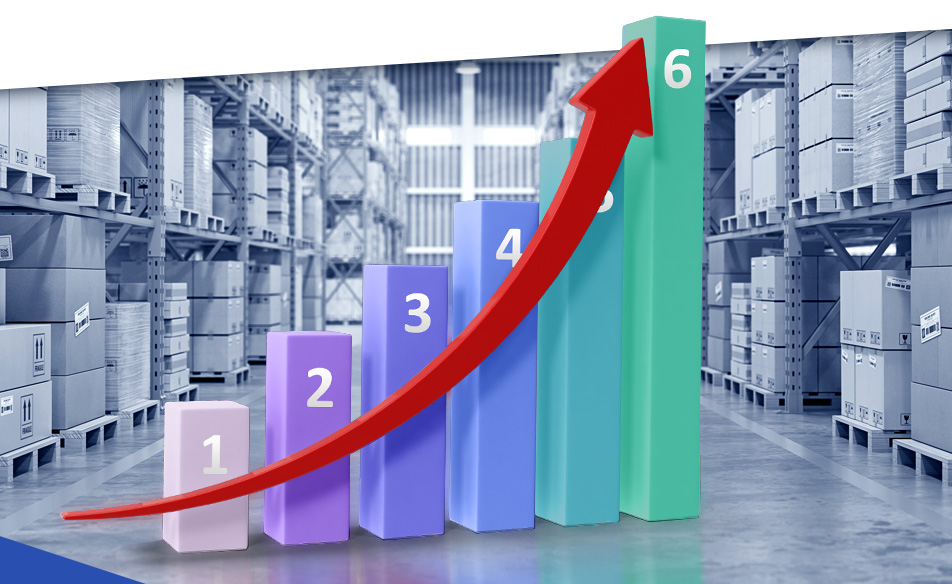
If you are a new professional in the field of demand planning and inventory management, you face a very steep learning curve. There are many moving parts in the system you manage, and much of the movement is random. You may find it helpful to take a step back from the day-to-day flow to think about what it takes to be a successful demand planner. Here are six tips for new demand planners that you may find useful; they are distilled from working over thirty five years with some very smart practitioners.

1. Know what winning means.

Inventory management and demand planning is not a squishy area where success can be described in vague language. Success here is a numbers game. There a number of key performance indicators (KPI’s) available to you, including Service Level, Fill Rate, Inventory Turns, Inventory Investment, and Inventory Operating Cost. Companies differ in the importance they assign to each metric such, but you can’t win without using some or all of these to keep score.

But “winning” is not as simple as getting the best possible score on each metric. The metric values that are most important vary across companies. Your company may prioritize customer service over cost control, or vice versa, and next year it might have reason to reverse that preference.

Furthermore, there are linkages among KPI’s that require you to think of them simultaneously rather than as a collection of independent scores. For example, improving Service Level will usually also improve Fill Rate, which is good, but it will also usually increase Operating Cost, which is not good.

These linkages express themselves as tradeoffs. And while the KPI’s themselves are numbers, the management of the bundle of KPI’s requires some wise subjectivity, because what is needed is a reasonable balance among competing forces. The fundamental tradeoff is to balance the cost of having inventory against the value of having the inventory available to those who need it.

If you are relatively junior demand planner, these tradeoff judgments may be made higher in the organization, but even then you can play a useful role by insuring that the tradeoffs are exposed and appreciated. This means exposed at a quantitative level, e.g., “We can increase Service Level from 85% to 90%, but it will require $100K more stock in the warehouse.” This kind of specific quantitative knowledge can be provided by advanced supply chain analytics.

2. Keep score.

We’re all a bit squeamish about being measured, but confident professionals insist on keeping score. Enlightened supervisors understand that external forces can ding the performance of your system (e.g., a key supplier disappears), and that always helps. But whether or not you have good top cover, you cannot demonstrate success, nor can you react to problems, without measuring those KPI’s.

Keeping score is important, but so is understanding what influences score. Suppose your Service Level has dropped from last month’s value. Is that just the usual month-to-month fluctuation or is it something out of the ordinary? If it is problematic, then you need to diagnose the problem. Often there are several possible suspects. For example, Service Level can drop because the sales and marketing folks did something great and demand has spiked, or because a supplier did something not so great and replenishment lead time has tanked. Software can help you track these key inputs to help your detective work, and supply chain analytics can estimate the impacts of changes in these inputs and point you to compensating responses.

3. Be sure your decisions are fact-based.

Software can guide you to good decisions, but only if you let it. Inputs such as holding costs, ordering costs, and shortage costs need to be well estimated to get accurate assessment of tradeoffs. Especially important is something as apparently simple as using correct values for item demand, since modeling demand is the starting point for simulating the results of any proposed inventory system design. In fact, if we are willing to stretch the meaning of “fact” a bit to include the results of system simulations, you should not commit to major changes without having reliable predictions of what will happen when you commit to those changes.

4. Realize that yesterday’s answer may not be today’s answer.

Supply chains are collections of parts, all of which are subject to change over time. Demand that is trending up may start to trend down. Replenishment lead times may slip. Supplier order minima may increase. Component prices may increase due to tariffs. Such factors mean that the facts you collected yesterday can be out of date today, making yesterday’s decisions inappropriate for today’s problems. Vigilance. Check out a prior article detailing the adverse financial impact of infrequent updates to planning parameters.

5. Give each item its due.

If you are responsible for forecasting hundreds or thousands of inventory items, you will be tempted to simplify your life by adopting a “one size fits all” approach. Don’t. SKU’s aren’t exactly like snowflakes, but some differentiation is required to do your job well. It’s a good idea to form groups of items based on some salient characteristics. Some items are critical and must (almost) always be available; others can run some reasonable risk of being backordered. Some items are quite unpredictable because they are “intermittent” (i.e., have lots of zero values with nonzero values mixed in at random); others have high volume and are reasonably predictable. Some items can be managed with relatively inexpensive inventory methods that make adjustments every month; some items need methods that continuously monitor and adjust the stock on hand. Some items, such as contractual purchases, may be so predictable that you can treat them as “planned demand” and pull them out from the rest.

Once you have formed sensible item groups, you still have decisions to make about each item in each group, such as deciding their demand forecasts, reorder points and order quantities. Here advanced demand planning software can take over and automatically compute the best choices based on what winning means in the context of that group.  

6. Get everybody on the same page.

Being organized is not only pleasing, it’s efficient. If you have a system for demand planning and inventory management, then everybody on your team shares the same objectives and follows the same processes. If you don’t have a system, then every demand planner has his or her own way of thinking about the problem and making decisions. Some of those are bound to be better than others. It’s desirable to standardize on the best practices and ban the rest. Besides being more efficient, having a standardized process makes it easier to diagnose problems when things go wrong and to implement fixes.
 

Volume and color boxes in a warehouese


Leave a Comment

Related Posts

Reveal Your Real Inventory Planning and Forecasting Policy by Answering These 10 Questions

Reveal Your Real Inventory Planning and Forecasting Policy by Answering These 10 Questions

In this blog, we review 10 specific questions you can ask to uncover what’s really happening with the inventory planning and demand forecasting policy at your company. We detail the typical answers provided when a forecasting/inventory planning policy doesn’t really exist, explain how to interpret these answers, and offer some clear advice on what to do about it.

Riding the Tradeoff Curve

Riding the Tradeoff Curve

In the supply chain planning world, the most fundamental decision is how to balance item availability against the cost of maintaining that availability (service levels and fill rates). At one extreme, you can grossly overstock and never run out until you go broke and have to close up shop from sinking all your cash into inventory that doesn’t sell.

Stop Leaking Money with Manual Inventory Controls

Stop Leaking Money with Manual Inventory Controls

An inventory professional who is responsible for 10,000 items has 10,000 things to stress over every day. Double that for someone responsible for 20,000 items. In the crush of business, routine decisions often take second place to fire-fighting: dealing with supplier hiccups, straightening out paperwork mistakes, recovering from that collision between a truck and the loading dock.

Recent Posts

  • Managing Spare Parts Inventory: Best PracticesManaging Spare Parts Inventory: Best Practices
    In this blog, we’ll explore several effective strategies for managing spare parts inventory, emphasizing the importance of optimizing stock levels, maintaining service levels, and using smart tools to aid in decision-making. Managing spare parts inventory is a critical component for businesses that depend on equipment uptime and service reliability. Unlike regular inventory items, spare parts often have unpredictable demand patterns, making them more challenging to manage effectively. An efficient spare parts inventory management system helps prevent stockouts that can lead to operational downtime and costly delays while also avoiding overstocking that unnecessarily ties up capital and increases holding costs. […]
  • 5 Ways to Improve Supply Chain Decision Speed5 Ways to Improve Supply Chain Decision Speed
    The promise of a digital supply chain has transformed how businesses operate. At its core, it can make rapid, data-driven decisions while ensuring quality and efficiency throughout operations. However, it's not just about having access to more data. Organizations need the right tools and platforms to turn that data into actionable insights. This is where decision-making becomes critical, especially in a landscape where new digital supply chain solutions and AI-driven platforms can support you in streamlining many processes within the decision matrix. […]
  • Two employees checking inventory in temporary storage in a distribution warehouse.12 Causes of Overstocking and Practical Solutions
    Managing inventory effectively is critical for maintaining a healthy balance sheet and ensuring that resources are optimally allocated. Here is an in-depth exploration of the main causes of overstocking, their implications, and possible solutions. […]
  • FAQ Mastering Smart IP&O for Better Inventory ManagementFAQ: Mastering Smart IP&O for Better Inventory Management.
    Effective supply chain and inventory management are essential for achieving operational efficiency and customer satisfaction. This blog provides clear and concise answers to some basic and other common questions from our Smart IP&O customers, offering practical insights to overcome typical challenges and enhance your inventory management practices. Focusing on these key areas, we help you transform complex inventory issues into strategic, manageable actions that reduce costs and improve overall performance with Smart IP&O. […]
  • 7 Key Demand Planning Trends Shaping the Future7 Key Demand Planning Trends Shaping the Future
    Demand planning goes beyond simply forecasting product needs; it's about ensuring your business meets customer demands with precision, efficiency, and cost-effectiveness. Latest demand planning technology addresses key challenges like forecast accuracy, inventory management, and market responsiveness. In this blog, we will introduce critical demand planning trends, including data-driven insights, probabilistic forecasting, consensus planning, predictive analytics, scenario modeling, real-time visibility, and multilevel forecasting. These trends will help you stay ahead of the curve, optimize your supply chain, reduce costs, and enhance customer satisfaction, positioning your business for long-term success. […]

    Inventory Optimization for Manufacturers, Distributors, and MRO

    • Managing Spare Parts Inventory: Best PracticesManaging Spare Parts Inventory: Best Practices
      In this blog, we’ll explore several effective strategies for managing spare parts inventory, emphasizing the importance of optimizing stock levels, maintaining service levels, and using smart tools to aid in decision-making. Managing spare parts inventory is a critical component for businesses that depend on equipment uptime and service reliability. Unlike regular inventory items, spare parts often have unpredictable demand patterns, making them more challenging to manage effectively. An efficient spare parts inventory management system helps prevent stockouts that can lead to operational downtime and costly delays while also avoiding overstocking that unnecessarily ties up capital and increases holding costs. […]
    • Innovating the OEM Aftermarket with AI-Driven Inventory Optimization XLInnovating the OEM Aftermarket with AI-Driven Inventory Optimization
      The aftermarket sector provides OEMs with a decisive advantage by offering a steady revenue stream and fostering customer loyalty through the reliable and timely delivery of service parts. However, managing inventory and forecasting demand in the aftermarket is fraught with challenges, including unpredictable demand patterns, vast product ranges, and the necessity for quick turnarounds. Traditional methods often fall short due to the complexity and variability of demand in the aftermarket. The latest technologies can analyze large datasets to predict future demand more accurately and optimize inventory levels, leading to better service and lower costs. […]
    • Future-Proofing Utilities. Advanced Analytics for Supply Chain OptimizationFuture-Proofing Utilities: Advanced Analytics for Supply Chain Optimization
      Utilities in the electrical, natural gas, urban water, and telecommunications fields are all asset-intensive and reliant on physical infrastructure that must be properly maintained, updated, and upgraded over time. Maximizing asset uptime and the reliability of physical infrastructure demands effective inventory management, spare parts forecasting, and supplier management. A utility that executes these processes effectively will outperform its peers, provide better returns for its investors and higher service levels for its customers, while reducing its environmental impact. […]
    • Centering Act Spare Parts Timing Pricing and ReliabilityCentering Act: Spare Parts Timing, Pricing, and Reliability
      In this article, we'll walk you through the process of crafting a spare parts inventory plan that prioritizes availability metrics such as service levels and fill rates while ensuring cost efficiency. We'll focus on an approach to inventory planning called Service Level-Driven Inventory Optimization. Next, we'll discuss how to determine what parts you should include in your inventory and those that might not be necessary. Lastly, we'll explore ways to enhance your service-level-driven inventory plan consistently. […]

      Here are six suggestions that you may find useful; they are distilled from working over thirty five years with some very smart practitioners. Cloud computing companies with unique server and hardware parts, e-commerce, online retailers, home and office supply companies, onsite furniture, power utilities, intensive assets maintenance or warehousing for water supply companies have increased their activity during the pandemic. Garages selling car parts and truck parts, pharmaceuticals, healthcare or medical supply manufacturers and safety product suppliers are dealing with increasing demand. Delivery service companies, cleaning services, liquor stores and canned or jarred goods warehouses, home improvement stores, gardening suppliers, yard care companies, hardware, kitchen and baking supplies stores, home furniture suppliers with high demand are facing stockouts, long lead times, inventory shortage costs, higher operating costs and ordering costs.